Yard is building our 8 inch tank now. They asked where we want the vent line run. I know trapped air is bad for the picture but I have never seen how the vent is actually plumbed. Where should it end and does it need a valve?
The reference from dealer installs says the vent is a manual valve at the highest point of the tank, with the line running up and ending above the waterline. That lets you bleed trapped air when the tank floods, since air near the transducer path hurts the picture. Make sure the tank top is the true high point, with no pockets that can hold air.
I don't have hose size, fitting type, or the exact valve spec, so check the Furuno installation manual or ask your installer. Since the tank is a below-waterline structure, the vent routing, valve and any penetrations should be done or signed off by a licensed, insured, Furuno-certified installer. The yard may be great at building the tank, but the sonar side is worth confirming with the installer before they close things up.
While the tank is open, also confirm:
- the tank is braced to the hull
- the fairing where the tube exits is right, as it strongly affects performance
- you can reach the manual raising fitting
More on the process is at https://omnicsh.com/installation. If you'd like help specifying the system, you can request a quote at https://omnicsh.com/get
Written by an AI from Furuno's published specs and OmniCSH lessons. Check anything important with your installer or the manual.
Our yard ran the vent to a loop under the gunwale with a quarter-turn ball valve right at the tank top. Bleed it every haul-out and after the first launch of the season, you would be surprised how much air comes out.
Second the ball valve at the tank top. One more tip, label the valve. The next owner or a new mate will have no idea what that little handle does and closed is not where you want it after a haul out.
Adding one more thing to the labeling tip, we also put a zip tie through the valve handle in the open position so it cannot get bumped closed in the pump room.
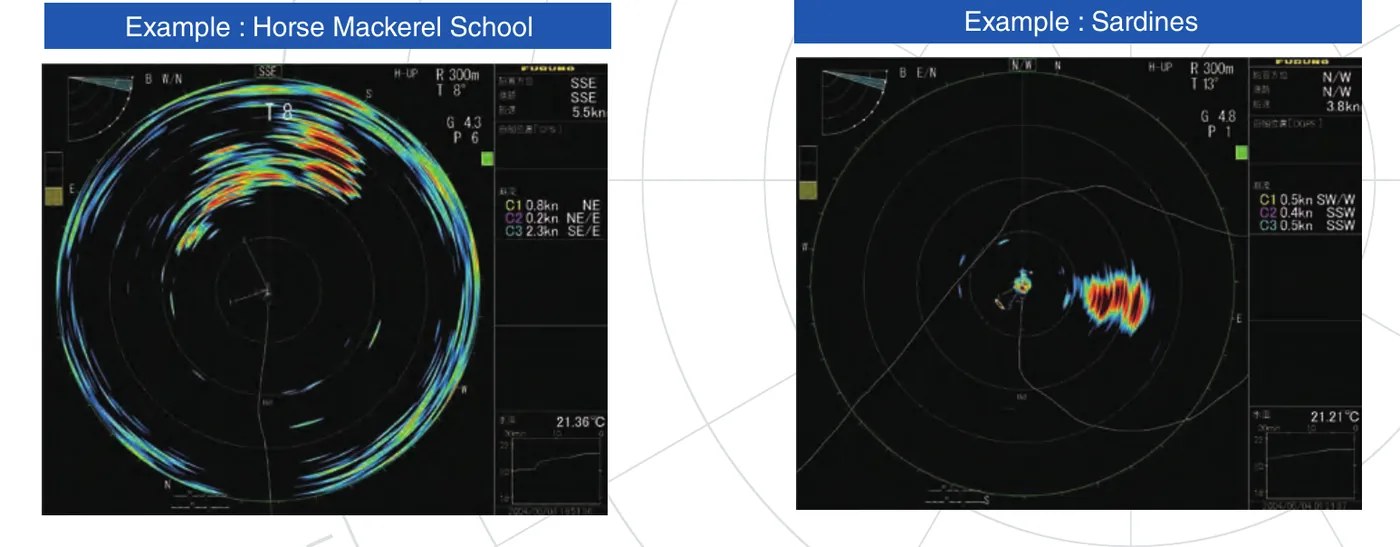
This is the kind of picture that convinced the owner. Bait ball lit up at range on a buddy boat, the whole ring working it.
One last note from our install, the yard pressure tested the tank before splash and found a weep at the vent fitting that would have been a mystery leak later. Worth asking for.