Stabilization and rough water
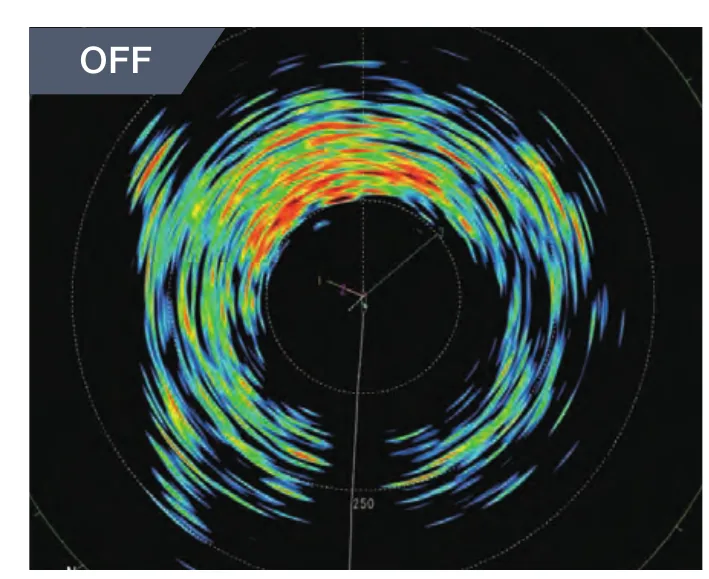
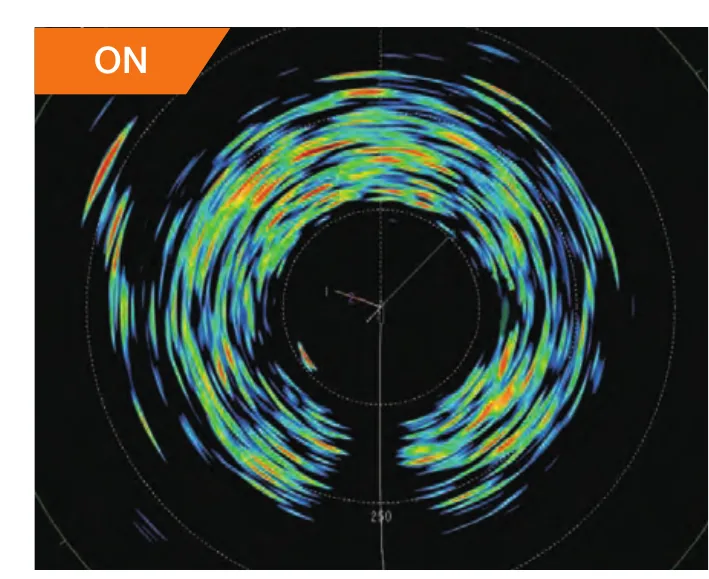
Drag across Furuno's real CSH-10 captures to see what the motion sensor does.
Why roll matters so much
The omni beam is 6° tall. A sportfisher rolling 10° in a beam sea can tip that beam completely above the fish on one side of the boat and into the bottom on the other, several times a minute. The picture smears, marks flicker in and out, and waves under the boat paint as clutter.
Beam stabilization fixes this electronically. A motion sensor measures roll and pitch, and the sonar re-aims its beam on every ping to hold the tilt you set. On the CSH-10 the motion sensor is standard, and Furuno stabilizes the transmit and receive beams independently.
The CSH-8L MK2 also stabilizes, using the MS100 motion sensor that Furuno USA includes in its package.
What captains do in rough water
- Capt. Rich Barrett pairs omni with a gyro stabilizer such as a Seakeeper: a steadier hull gives cleaner returns.
- Capt. Jon Meade of Showtime! found South Florida's green water, rip edges and rough weather produced enough clutter that he switched the omni off during the 2022 Gold Cup and fished other cues.
- Furuno's own advice for any omni: slow down. Searching at 10 to 15 knots and dropping to 2 to 8 knots with gear out keeps flow noise down.
Captains' accounts from InTheBite, February 2024; speeds from Matt Wood of Furuno in Yachting.